
Things to Do in Trang in March
March weather, activities, events & insider tips
Low Season · Budget Friendly
March Weather in Trang
Long-run averages for March
95°F (35°C)
High Temp
73°F (22°C)
Low Temp
4.0 inches (102 mm)
Rainfall
69%
Humidity
13
Sunny-Day UV
⚠ March marks the transition from dry to wet season. Afternoon storms arrive with increasing frequency as the month progresses. These tend to be intense 20 to 40 minute downpours. Not all-day rain. Unpaved island paths turn slippery. Open-water boat crossings get choppy. Flexible scheduling helps. Wait out the squall.
⚠ Extreme UV at this latitude means sunburn develops in under 20 minutes on unprotected skin. on boats. Water reflection intensifies exposure. Cover up. Reapply sunscreen aggressively. Do not underestimate cloud cover. It still transmits the majority of UV at these levels.
Is March Right for You?
Weigh the advantages and considerations before booking
Advantages
- + March marks your final reliable shot at Trang's Andaman island chain before monsoon swells shutter boat routes in May. Visibility around Ko Kradan and Ko Muk hovers between 15 and 25 metres (50 to 80 feet), about as clear as southern Thai waters ever get. Skip the ferry-terminal chaos of Phuket. This is your window.
- + Humidity hits 69 percent, tying February for the year's lowest reading. That makes Trang's 35°C (95°F) afternoons far more bearable than the same temperature in August, when moisture climbs past 87 percent. You will still soak your shirt by noon. The air moves. Your lungs cooperate.
- + Trang attracts a sliver of the visitors that neighbouring Krabi and Phuket swallow, even in high season. At Ko Kradan, a beach routinely ranked among southern Thailand's best, you can still claim a 30-metre (100-foot) stretch of sand on a weekday morning in March. Phi Phi lost that privilege decades ago.
- + March sits at dry season's tail, so rooms remain available without the December-to-February booking crush. You probably will not get locked out of guesthouses the way peak-season Railay Beach travelers sometimes do. The better waterfront spots on Ko Ngai still fill three weeks out. Plan ahead.
Considerations
- − The heat is brutal. At 35°C (95°F) average highs, March ties April as Trang's hottest month. Concrete surfaces in town radiate stored warmth well past sundown. Between 11am and 3pm, walking Trang's old-town shophouse streets feels like standing inside a clothes dryer. Mornings and evenings are yours. Midday belongs indoors.
- − Rainfall hits 102 mm (4.0 inches), four times February's total. The monsoon is scouting the territory. Showers arrive in sharp, concentrated bursts rather than all-day grey, but they can ambush you mid-crossing on a longtail boat. A 20-minute ride becomes damp and choppy. Flexibility is mandatory.
- − Trang town mostly shuts by 10pm. The Ratchadamnoen night market douses its charcoal grills around nine. There is no bar district in the Phuket or Krabi sense. Evening entertainment is scarce here. The payoff? Mornings that start spectacularly early. Dim sum halls fill before 6am.
Best Activities in March
Top things to do during your visit
Trang Island Chain Day Tours to Ko Kradan, Ko Muk, and Ko Ngai
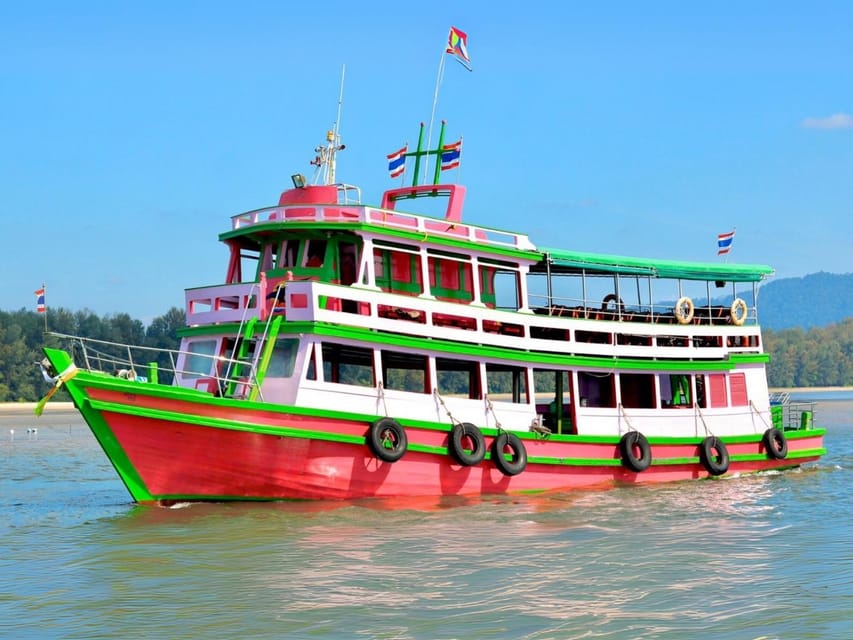
March is the last full month when longtail and speedboat operators run daily circuits to Trang's three marquee islands without monsoon swell cancellations. Ko Kradan's west-facing beach slopes into water so transparent you can count sea cucumbers from a standing position. At Ko Ngai the reef begins barely 50 metres (165 feet) from shore, shallow enough that tentative swimmers spot parrotfish and blue-spotted rays without diving deep. The heat that punishes Trang town at midday vanishes on the water. The Andaman breeze and the option to slide overboard keep you comfortable. Most circuits leave Pak Meng Pier between 8:30 and 9am, return by late afternoon, and include three or four island stops. March's thinner crowds mean you share beach space with perhaps forty people, not the two hundred that swamp a Phi Phi landing zone. Book through licensed operators at least a week ahead. Check current options in the booking section below.
Booking Tip: Reserve seven to ten days ahead for standard multi-island longtail circuits. Licensed operators display national park concession permits. Boats should carry life jackets for every passenger. Speedboats cut transit time roughly in half but pound harder in afternoon chop. See current tour availability in the booking widget below.
Emerald Cave Swimming Excursion at Ko Muk
Tham Morakot, the Emerald Cave on Ko Muk's western face, delivers the single most dramatic moment most travelers experience in Trang province. You swim roughly 80 metres (260 feet) through a limestone tunnel so dark you lose all sense of direction, the water cool against sun-baked skin, fingers brushing wet rock for guidance, your breathing amplified by stone. Then the tunnel opens. A roofless interior lagoon ringed by sheer jungle cliffs appears, water shifting from black to jade green as daylight strikes from above. In March, tides and calm seas align favourably for access most mornings. Timing is everything. Arrive before 10am, before Krabi tour boats turn the cave mouth into a crowded swim lane. Afternoon tides in late March can shallow and roughen the passage. Morning is not just better. It is the only responsible call. Check current guided excursions in the booking section below.
Booking Tip: Book as part of an island day tour or as a dedicated Ko Muk half-day excursion at least a week ahead. Confirm the operator checks tide tables before departure. Low tide can tighten the cave passage uncomfortably. Bring a waterproof headlamp if you want to see cave walls during the swim, though most groups navigate by feel. See current options in the booking widget below.
Trang Old Town Morning Dim Sum and Coffee Walk
Trang's Hokkien Chinese community has steamed bamboo baskets of dim sum since before dawn for nearly a century. This morning ritual is the single most underappreciated food experience on Thailand's Andaman coast. By 5:30am, old-town shophouses along Trang's commercial centre are thick with steam from siu mai, har gow, and bak kut teh. The scent of rendered pork fat and sesame oil mingles with bitter local coffee roasted dark enough to stand a spoon in. The tables are low. The stools are plastic. The Mandarin-inflected Hokkien chatter of elderly regulars forms a soundtrack you will not hear in Bangkok or Chiang Mai. In March, eating at this hour has practical payoff beyond culture. By 6am the air is still a manageable 26°C (79°F) or so. The walk between dim sum halls and traditional coffee shops lets you cover old-town Trang's Sino-Portuguese shophouse architecture before heat pins you indoors. The moo yang, whole pigs roasted over charcoal until skin crackles and fat underneath melts into meat, appears on nearly every table alongside steamer baskets. Trang locals eat this combination the way Parisians eat croissants. Daily. Without ceremony. With complete seriousness about quality.
Booking Tip: No booking needed. The dim sum district is walkable from any central accommodation. Arrive by 5:30 to 6am for the full spread. By 8am the best items have sold out and kitchens are closing. Point-and-order works at every shop. If you want a guided food walk with cultural context, see current options in the booking widget below.
Dugong Spotting and Seagrass Kayaking at Ko Libong
Ko Libong, Trang's largest island, sits over the Andaman's most significant remaining dugong habitat. March's calm, clear water makes sightings more likely than at any other time of year. These animals, biological cousins of manatees and probable source of ancient mermaid legends, graze on seagrass beds in the shallow eastern channel where water warms to bathtub temperature by mid-morning. From a kayak drifting over grass flats, you can sometimes see their grey shapes moving below like slow-motion shadows. They surface every few minutes with a wheezy exhalation that carries across still water. This is not a guaranteed encounter. Anyone who promises you one is selling something. March's flat seas and reduced boat traffic improve odds substantially compared to monsoon months when animals retreat to deeper, harder-to-reach water. The island itself has a quieter character than Trang's resort islands. It has a Muslim fishing community, unpaved interior roads, and mangrove estuaries where roots form archways you paddle through at high tide. The water is dark tea-colour beneath you. The canopy is alive with clicking and whistling of kingfishers.
Booking Tip: Arrange day trips through licensed marine tour operators departing from Kantang pier, roughly 25 km (15.5 miles) south of Trang town. Book three to five days ahead. Morning departures between 7 and 8am give the best odds for calm water and dugong activity. See current excursion options in the booking widget below.
Hat Chao Mai National Park Coastal Exploration
Hat Chao Mai stretches along Trang's mainland coast and wraps around several offshore islands. In March the park sits in that sweet window where landscape is still lush from previous monsoon's rain but trails have dried enough to walk without sinking to your ankles. The 6 km (3.7 mile) beach at Pak Meng is the park's mainland anchor. It is a wide crescent of grey-gold sand backed by casuarina pines that throw enough shade for a morning without an umbrella. The real draw is the mangrove boardwalk system near park headquarters. The air smells of salt and decomposing leaves in a way that is not unpleasant so much as intensely alive. Exposed root systems form geometric patterns that look deliberately sculpted. At low tide, mudflats beyond mangroves attract wading birds, mudskippers hauling themselves between pools with visible effort, and fiddler crabs waving single oversized claws in a display that never stops looking absurd. March heat means you want to be on the trail by 7am. Finish by 10:30am at the latest. Afternoon visits are possible. They are unpleasant.
Booking Tip: The park is accessible by road from Trang town, about 40 km (25 miles) west. Songthaews run the route, though chartering one gives more flexibility. National park entry applies. Guided kayak and boat tours of coastal mangrove systems are available through operators based at Pak Meng. See current options in the booking widget below.
Ko Rok Snorkeling Day Trip
Ko Rok Nok and Ko Rok Nai, twin islands about 100 km (62 miles) southwest of Trang's mainland coast, hold some of the most intact shallow reef in the southern Andaman. The coral garden between the two islands sits in water so clear that from the surface you can identify individual species of butterflyfish at 8 metres (26 feet) depth. Hard coral formations, which took decades to rebuild after earlier bleaching events, glow in shades of purple, mustard, and electric blue that look retouched but are not. March is one of the best months for this trip. The sea is typically calm enough for the 90-minute speedboat crossing. Visibility is near its annual peak. The national park is still open, as it closes from mid-May through October when monsoon swells make the crossing dangerous. The catch is the journey itself. Ninety minutes of open Andaman at speed on a hard-hulled boat can jar your spine on choppy days. You will get drenched regardless. The reward is worth the ride. Anyone prone to seasickness should bring medication. Sit near the stern.
Booking Tip: Book at least a week in advance through licensed speedboat operators. The crossing requires calm seas, so operators occasionally cancel on rougher days even in March. Reputable ones will reschedule rather than risk it. Trips typically depart from Pak Meng pier between 7:30 and 8am and return by mid-afternoon. See current availability in the booking widget below.
Where to Stay in Trang in March
Hand-picked hotels across price tiers for March travellers.
Packing Checklist
Bookmark this page — your progress is saved between visits
Need the full list with shopping links?
Climate-specific gear, brand recommendations, and what to leave at home.
View Trang Packing List →Essential Tips
Insider knowledge and common pitfalls to avoid
Insider Knowledge
Trang's dim sum halls operate on a clock that catches most tourists off guard. The serious eating happens between 5:30 and 7am, and by 8am the best steamer baskets are empty and the charcoal-roasted moo yang is gone. If you roll in at 9am expecting the full spread, you will find chairs stacked on tables and an owner already mopping the floor. Set an alarm. The food is worth losing sleep over.
The Emerald Cave at Ko Muk has a tide window that most island tour operators understand but rarely explain to clients. At high tide, the cave passage narrows and the swim becomes longer and more claustrophobic. At low tide, exposed rocks make the entrance awkward but the interior lagoon opens up dramatically. Morning visits on a falling tide hit the sweet spot. Ask your operator about the tide schedule for your specific day, not just the generic departure time.
Kantang, the old railway terminus town about 25 km (15.5 miles) south of Trang, is where the pier departures for Ko Libong happen, and most travelers treat it as a transit point. That is a mistake. The town has its own row of Sino-Portuguese shophouses along the river, a slower pace than Trang town, and a fried-fish lunch culture centered around the catch that comes in with the morning boats. Give it at least a half-day, ideally a midday meal and a wander along the river.
March evenings in Trang cool to about 26 to 28°C (79 to 82°F) after dark, which is comfortable enough for the Ratchadamnoen night market area to feel pleasant rather than punishing. The stalls selling khanom jeen, Trang's version of rice noodles with curry, ladle three or four different sauces and the custom is to combine them on one plate. Watch what locals pile on before you order, the combinations are counterintuitive but tested by generations. The grilled squid carts toward the eastern end of the market roast the catch over coconut-husk charcoal, which gives the flesh a faint sweetness and a smoky char that gas grills cannot replicate.
Avoid These Mistakes
Booking island tours from Krabi instead of from Trang's Pak Meng or Kantang piers. Ko Muk, Ko Kradan, and Ko Ngai are geographically Trang's islands, and boats from Trang reach them in 30 to 45 minutes. The same islands accessed from Krabi take 90 minutes or longer, cost more, and arrive with larger tour groups. If you are staying in Trang, depart from Trang.
Scheduling outdoor sightseeing in Trang town between 11am and 3pm. At 35°C (95°F) with the sun directly overhead, the old-town shophouse walk that takes a pleasant 45 minutes at 7am becomes a grim endurance test at noon. The concrete radiates stored heat, shade is scarce, and the charm of the architecture disappears behind the survival instinct to find air conditioning. Mornings and late afternoons are the only civilised windows.
Treating Trang as a day trip from Krabi. The two cities are about 130 km (81 miles) apart, and while the drive is only two hours, cramming Trang's morning food culture, an island excursion, and old-town exploring into a single day from Krabi means you experience none of them properly. Trang rewards at least two or three nights, in March when island conditions justify multiple boat days.
Ready to plan your trip to Trang?
Now that you've got the research covered, here's where to go next.
Book Experiences in Trang
Top-rated things to do in Trang this March
Explore More Activities in Trang
Didn't see anything interesting yet?
Browse Viator's full catalog of tours, day trips, food experiences, and private guides in Trang.
See All Trang Tours on Viator